The Sheikh Zayed Grand Mosque in Abu Dhabi is not just the emirate’s main religious sanctuary — it is a symbol of inner harmony, cultural openness, and architectural genius. Built in the heart of the city on Sheikh Rashid Bin Saeed Street, it has become an essential part of the UAE capital’s identity. From the very first glance, you are struck by the dazzling white marble, the gleam of gold accents, the watercolor shades of the walls and columns — all of it creates the impression of an oasis of light and tranquility.
Construction of the mosque began in 1996. It was a personal project of Sheikh Zayed bin Sultan Al Nahyan, who dreamed of creating a temple that would unite people and serve as a legacy for future generations. After 11 years of meticulous work, the mosque opened in December 2007. Today, it is not only a place of worship but also the final resting place of the UAE’s first president, whose spirit of kindness and openness is felt in every element of the building. Every day, the mosque welcomes tens of thousands of visitors. Worshippers come seeking peace in prayer, while tourists arrive hoping to immerse themselves in the world of Islamic art. Every corner of the mosque is imbued with the idea of peace, respect, and openness — values passed down by the founder of the UAE, Sheikh Zayed bin Sultan Al Nahyan.
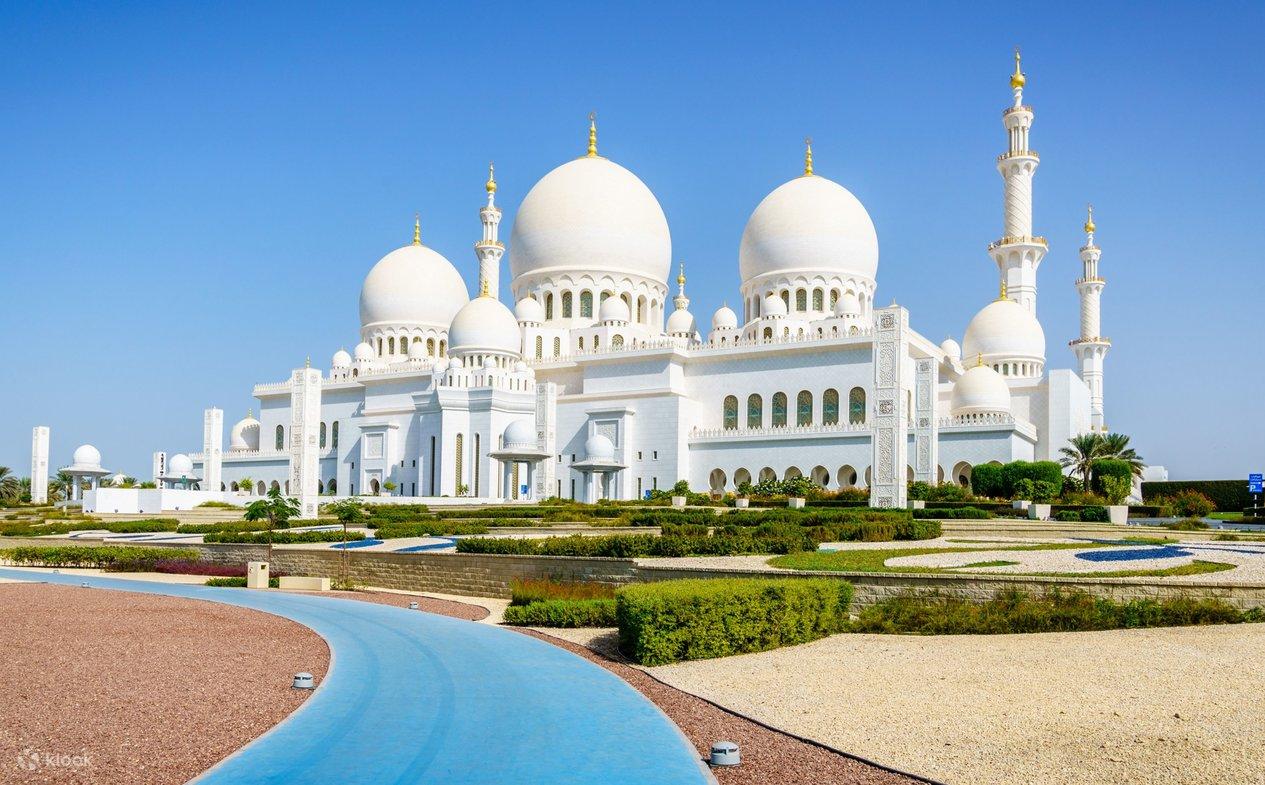
Architectural harmony of white marble
The first thing you notice when you look at the Sheikh Zayed Grand Mosque is its stunning whiteness. It seems as if the building is woven from light rather than stone. And that feeling isn’t deceptive: everywhere you look, there is white marble — the main actor in this architectural masterpiece.
The domes make an especially strong impression — all 82 of them! The central dome rises above the main prayer hall and is considered one of the largest in the world. All domes are clad in pure white marble, their "crowns" topped with golden finials that play with the sunlight at every moment of the day.
And the minarets! They are a story of their own. Their design blends architectural traditions from across the Islamic world: Mamluk, Ottoman, and even Fatimid influences. Looking at them, you feel transported across different regions and eras — and this is intentional. The mosque was conceived as a symbol of unity, a place where cultures meet.
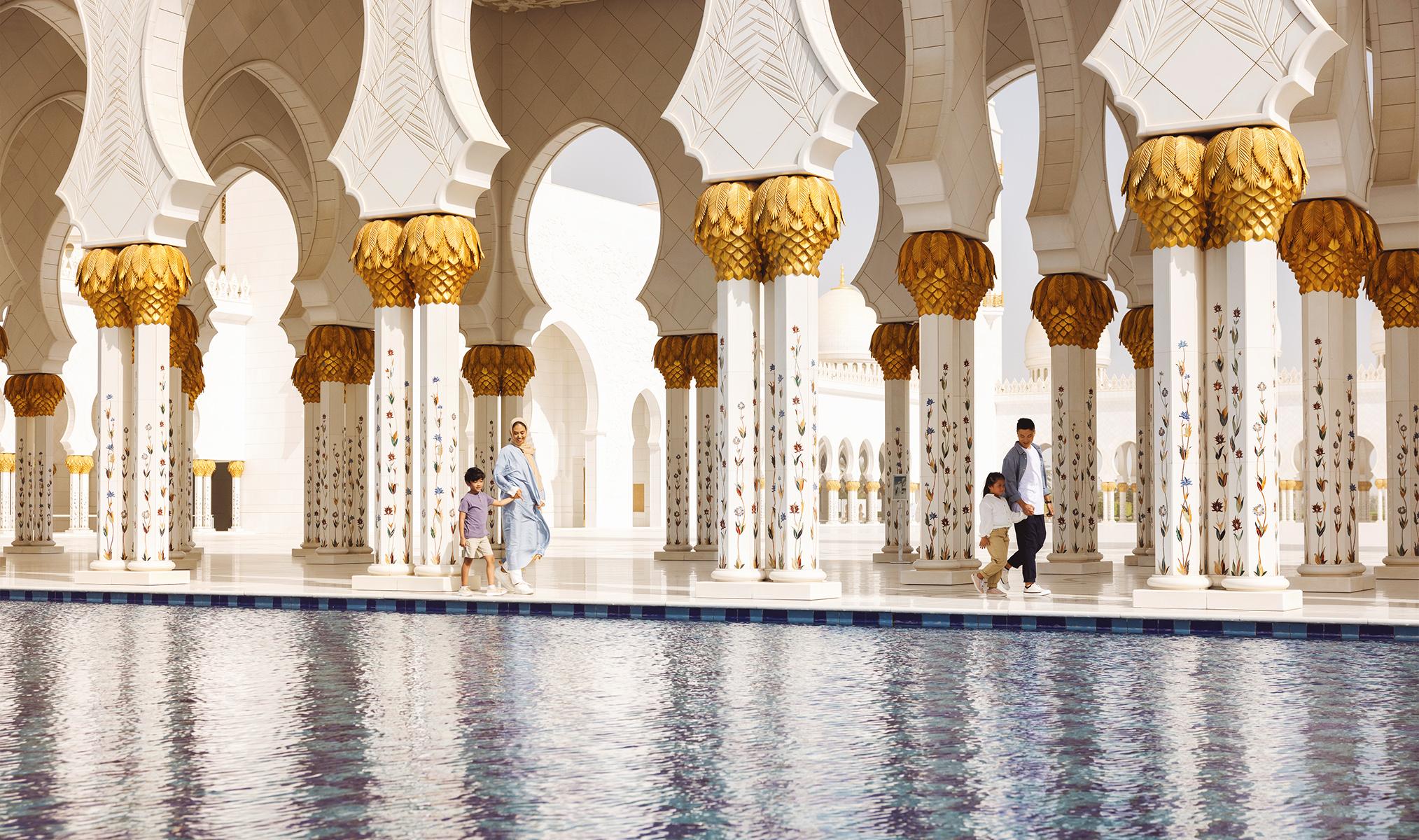
The mosque’s interior is full of beauty as well. The columns are clad in multicolored marble, each creating a unique pattern. One particularly interesting detail: the decorative capitals of the columns are located at the bottom, not at the top as is traditional — a unique innovation in Islamic architecture.
Every hall of the mosque is thoughtfully designed, from the play of colors on the walls to the soft transitions of light that make the space feel alive. It is a place where beauty meets spirituality, leaving a deep impression on everyone who visits.
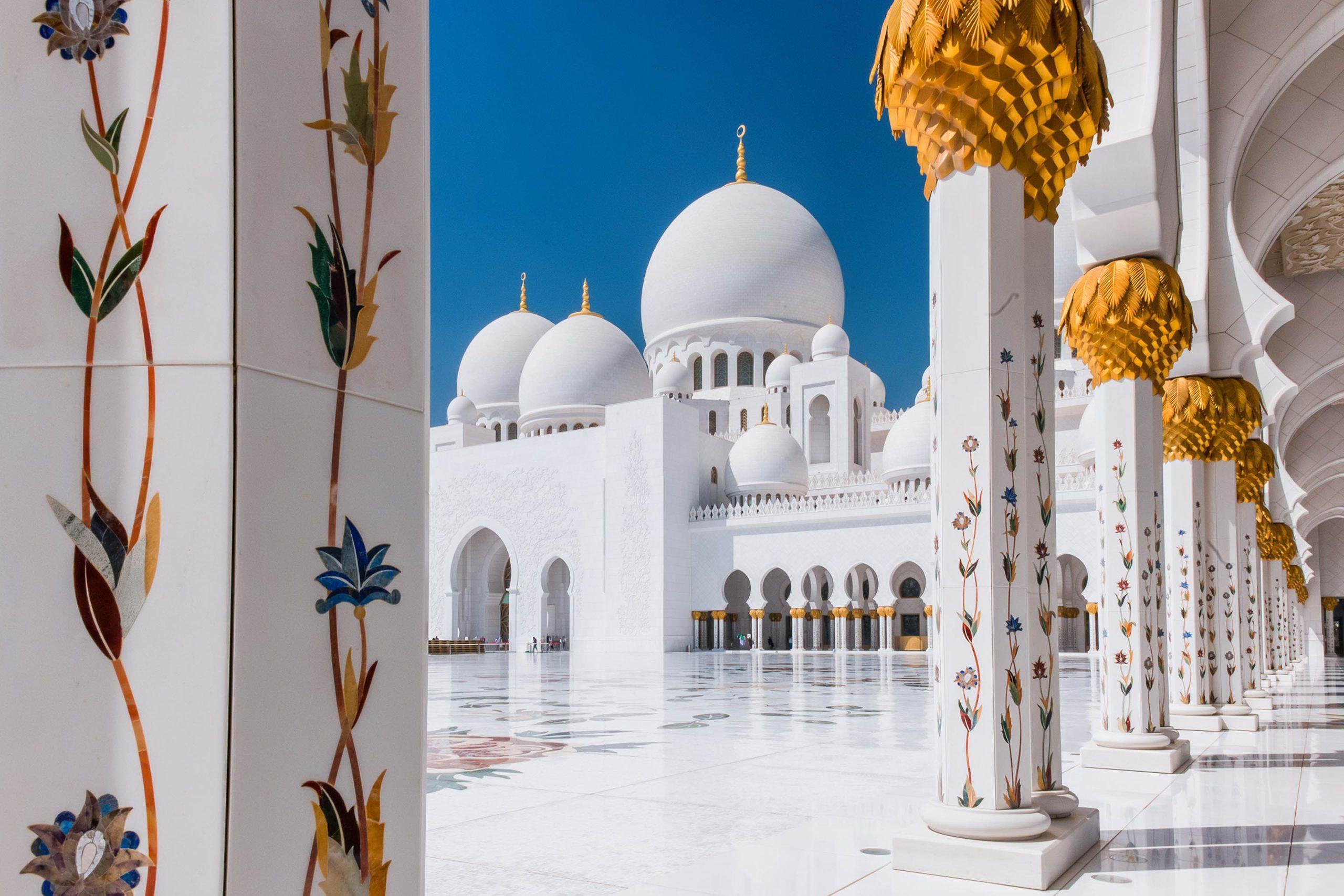
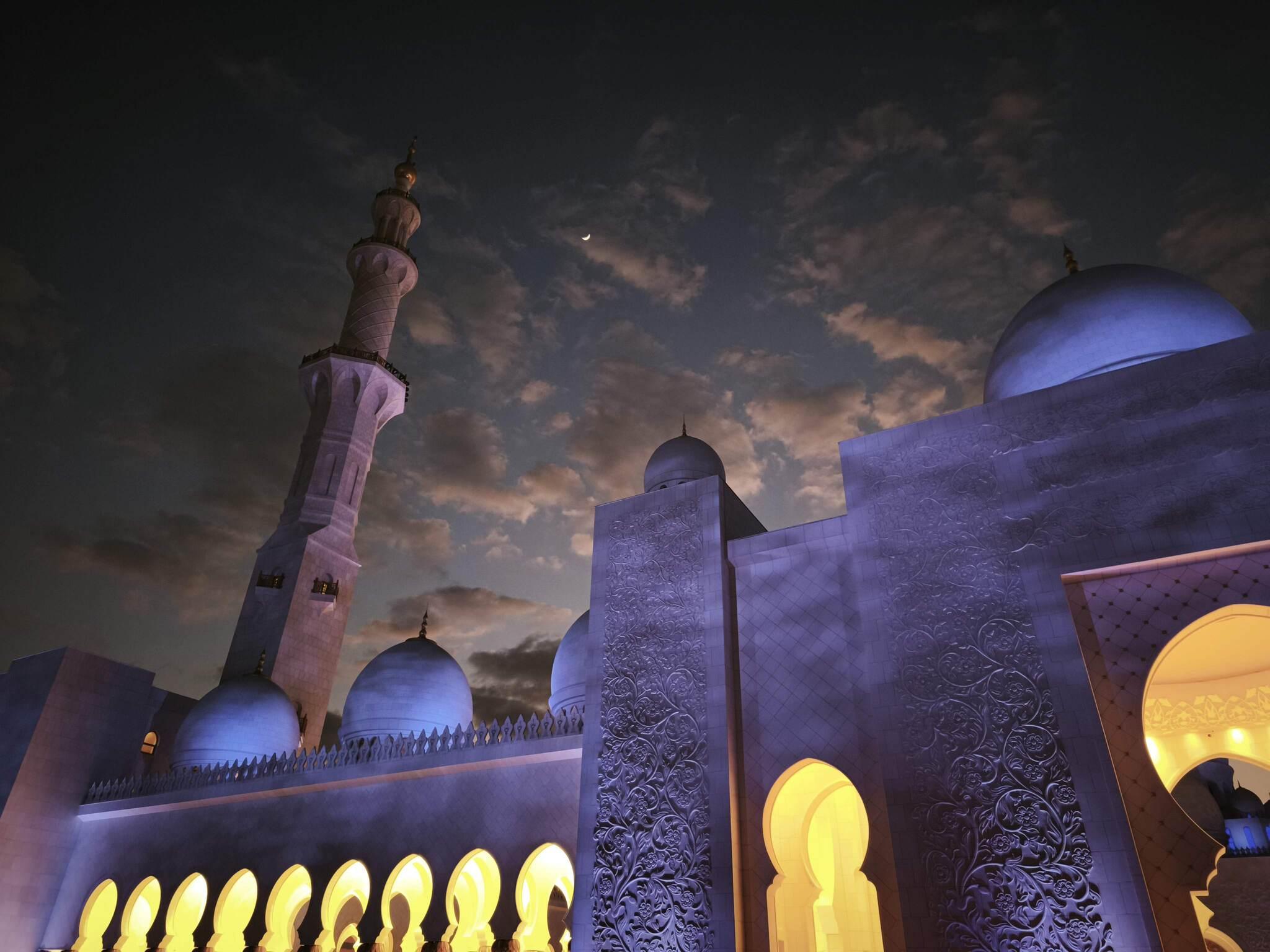
A Look Upward: The Majesty of the Four Minarets
The four minarets, each about 106 meters tall, seem to reach straight into the sky, emphasizing the grandeur of the architectural vision. Their design is divided into three distinct levels, each reflecting a different historical style.
Each minaret has its own story, its own character. If you look closely, you can see how different eras and cultures intertwine in their design. The lower part — the base — is infused with the spirit of Morocco and Andalusia. It conveys stability and calm, like ancient fortresses. Its square, solid form is simple yet enduring.
The middle section tells a different story. It is octagonal, elegant, and reminiscent of the Mamluk period of the 13th–16th centuries — an age of flourishing science, art, great warriors, and wise rulers. Your gaze lingers on the delicate lines, on the interplay of light and shadow.
Finally, the upper part — cylindrical and light — seems almost to float. It breathes with the heritage of the Ottoman Empire, expressing its power and grandeur. The simplicity of its form is deceptive: it speaks of strength and confidence. At the very top sit graceful golden lanterns decorated with mosaic. They sparkle in the sunlight like beacons pointing toward the divine. This is a tribute to Fatimid heritage, a reminder of wisdom and spirituality.
Together, these elements make the mosque not just a place of prayer, but an open-air living museum of Islamic architecture.
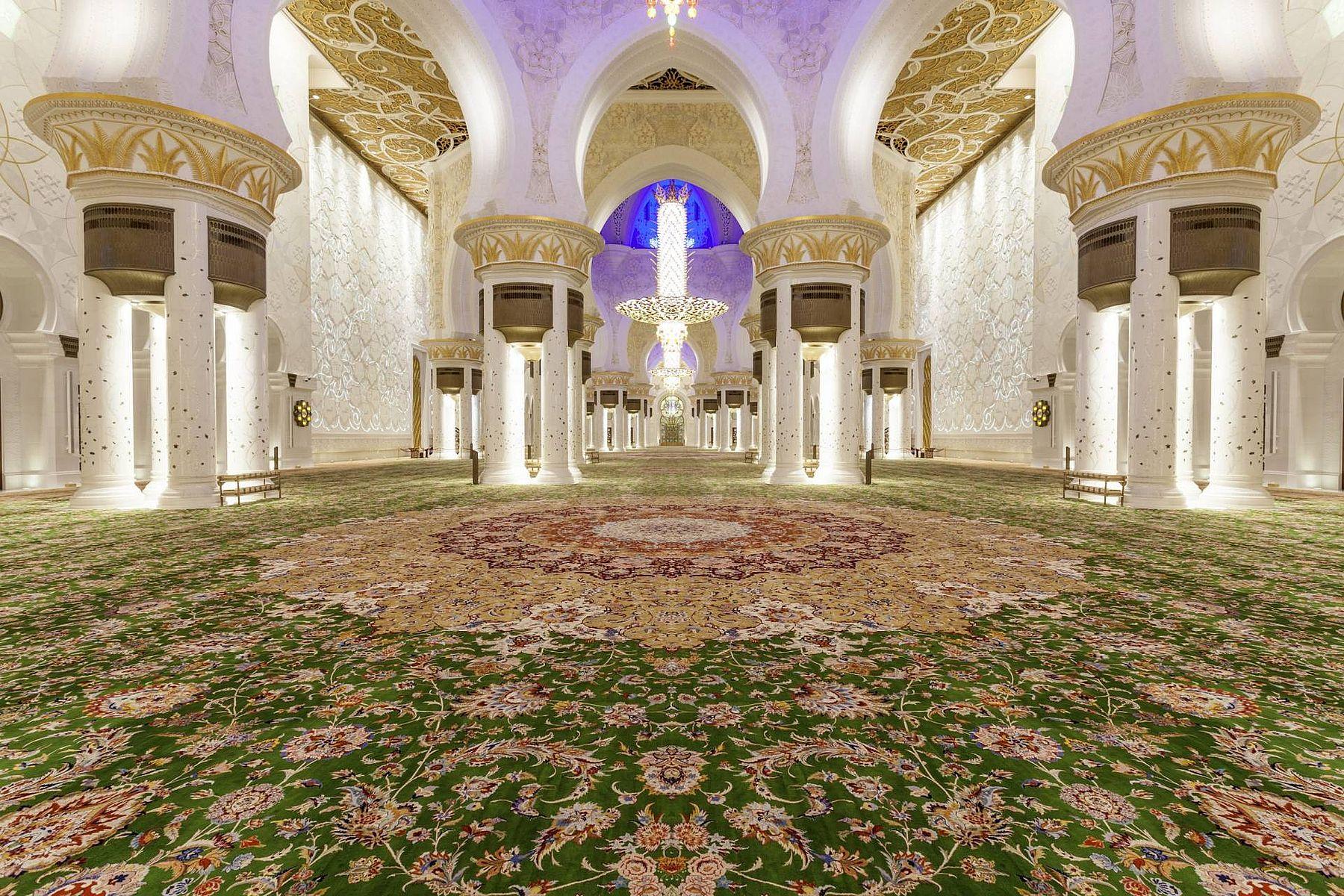
A Wonder of Human Hands: The Largest Carpet in the World
The mosque’s main prayer hall contains a truly unique masterpiece—the largest handwoven carpet on Earth, covering around 5,400 m². Over a thousand skilled artisans worked together to bring this marvel to life. The project was guided by artist Ali Khaliqi, whose vision shaped the creation.
Work on the carpet lasted two full years. The first eight months were devoted to designing a perfect pattern — every curve, every line had to be immaculate. Then, for an entire year, the artisans wove the carpet day after day, putting a piece of their heart into every knot.
The motifs woven into the carpet are no coincidence. They reflect ancient Islamic patterns and a harmony of colors conveying warmth and beauty. It is more than decoration — it is a symbol of persistence and craftsmanship passed down through generations.
This carpet is a living link between past and present. It reminds us of the value of handmade artistry and how beauty can be created through collective effort. It is a place where art meets history.
Light That Breathes With the Moon
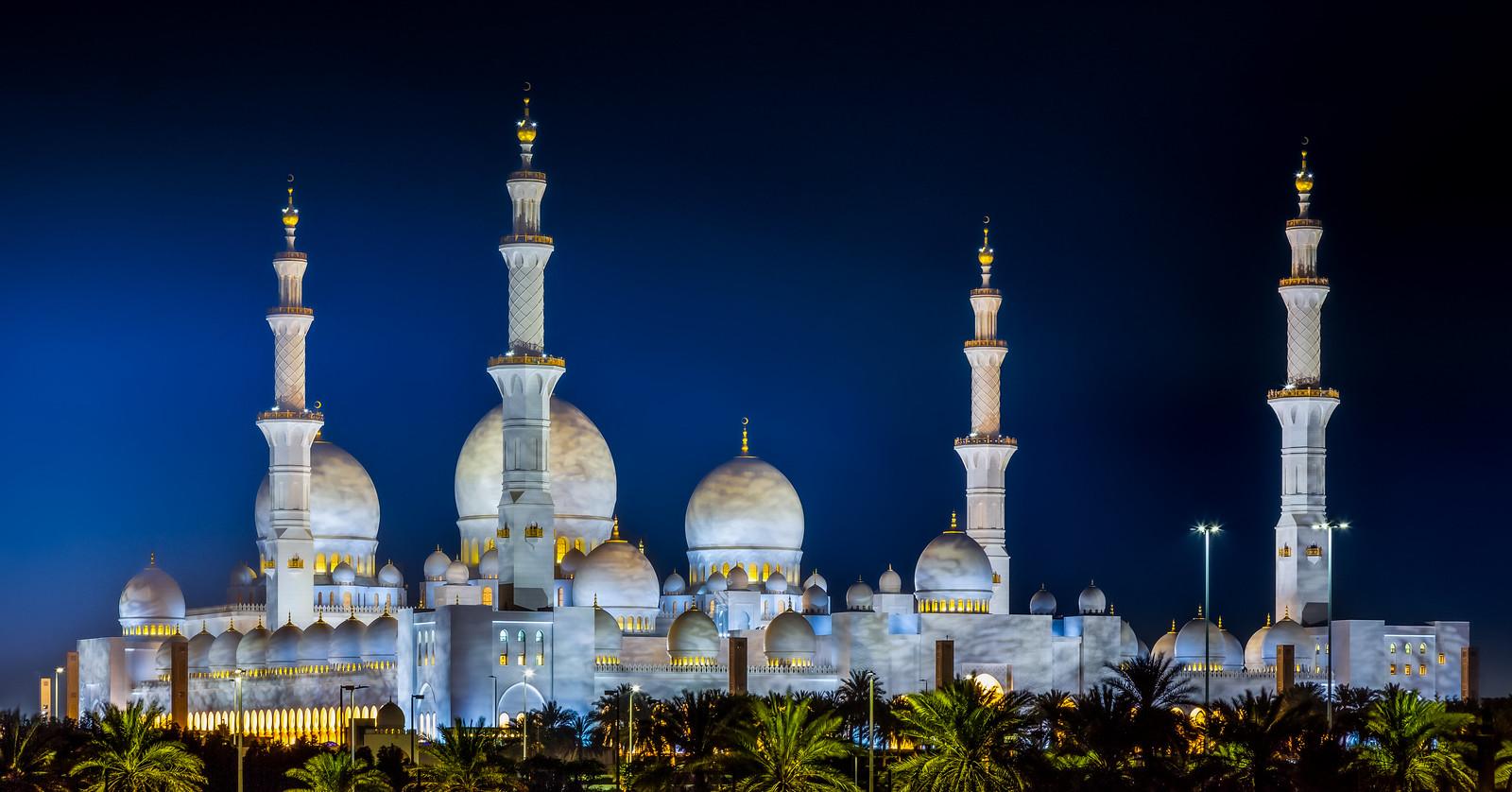
One of the most mesmerizing features of the mosque is its unique nighttime lighting system, which changes according to the phases of the moon. During a full moon, the mosque appears bathed in soft, gentle light. It seems as though the walls themselves begin to glow, reflecting the celestial radiance. Everything becomes quiet and serene, inviting contemplation.
But when the moon starts to wane, the magic begins. The white glow transforms into deep, saturated shades of blue. It is as if the mosque is sinking into the depths of a nocturnal ocean.
The peak of this light performance occurs on the fourteenth night, when the moon disappears entirely from the sky. At this moment, the mosque is enveloped in a dark-blue aura. It is not simply darkness — it is a deep, mysterious color that mesmerizes and holds you captive. It is a sight that stays with you forever.
But this beauty is more than aesthetic. Behind the lighting system lies a philosophy. The mosque seems to live in harmony with nature, following the lunar cycle. It serves as a reminder of the fleeting nature of time and inspires visitors to pause and reflect on the eternal. It is a place where architecture and nature merge into one, creating an atmosphere found nowhere else.
Crystal Stars: The Magnificent Chandeliers
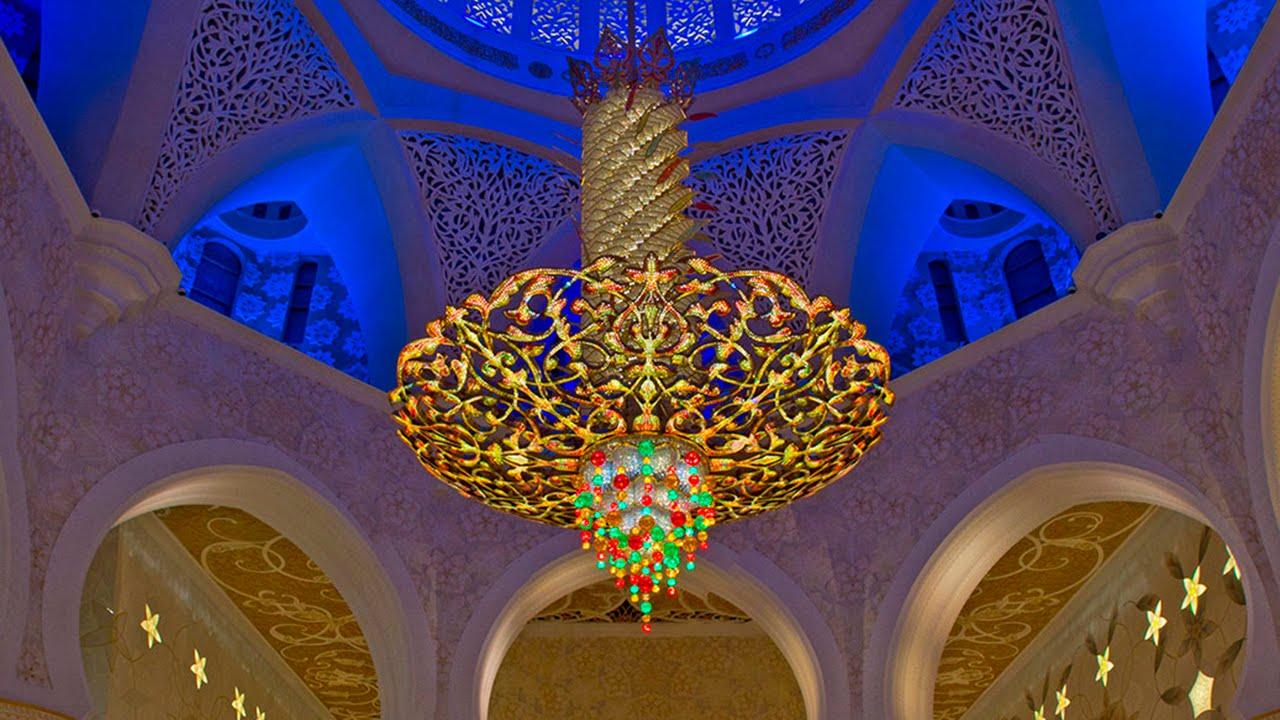
The interior of the mosque is adorned with seven giant chandeliers crafted by the German manufacturer Faustig. The largest of them reaches 15 meters in height and weighs around 12 tons. Its crystal elements and gold accents create the illusion of a cascade of precious gems.
If you look closely, you’ll notice that the chandeliers resemble upside-down palm trees. In the Emirates, the palm symbolizes luck and prosperity, giving this design a special meaning.
To create these chandeliers, artisans used steel, genuine 24-karat gold, and millions of shimmering crystals. Together, they produce a breathtaking effect, turning ordinary lighting fixtures into something magical and unforgettable. This is not just light — it is cultural heritage, a symbol of beauty and abundance. It truly leaves you speechless.
The Energy of Cultures from Around the World
Materials for the construction of the mosque were sourced from many countries: Morocco, Turkey, Italy, Egypt, China, Greece, New Zealand, Pakistan, Germany, India, and Austria. What does this mean?
It means that every brick, every tile, every ornament carries a fragment of world culture. It is as if different nations came together to create something beautiful, each contributing a piece of their soul.
This international approach made the mosque not merely an architectural masterpiece, but a symbol of cultural interaction. It reminds us that we are all part of one big world, and that respecting other cultures enriches us. This is not just a place for prayer — it is a symbol of unity and hope for a better future, one free of hatred and conflict.
The Sheikh Zayed Mosque is far more than an architectural wonder. It is a space where history meets modernity, where light and shadow create a unique harmony, and where every detail embodies the idea of peace and respect. Visiting this majestic sanctuary is not simply a tour — it is a profound spiritual experience. The mosque invites everyone to touch beauty, to pause for a moment, and to feel the power of silence.