
Dubai began 2026 with an unprecedented surge in the real estate market. According to official data from the Dubai Land Department, in January the total transaction volume reached 107.96 billion dirhams, which is almost 2 times higher than the same period last year. Converted, this is approximately 27 billion euros, highlighting the scale of growth. Annual dynamics reached an impressive 86.5%, and the number of registered transactions increased to 21,884.
It is especially noteworthy that sales volume reached 70.05 billion dirhams, or about 17.5 billion euros. This is the highest monthly result in the entire history of the emirate’s real estate market. Experts call January 2026 a turning point that may set the tone for the entire year.
Why Dubai’s real estate market continues to grow
Analysts link such rapid growth to the transformation of Dubai’s status. The city has firmly established itself not only as a tourist center but also as a place for permanent residence, business operations, and international investment. More and more foreigners consider purchasing property in the emirate as a strategic step for diversifying capital in euros and other currencies.
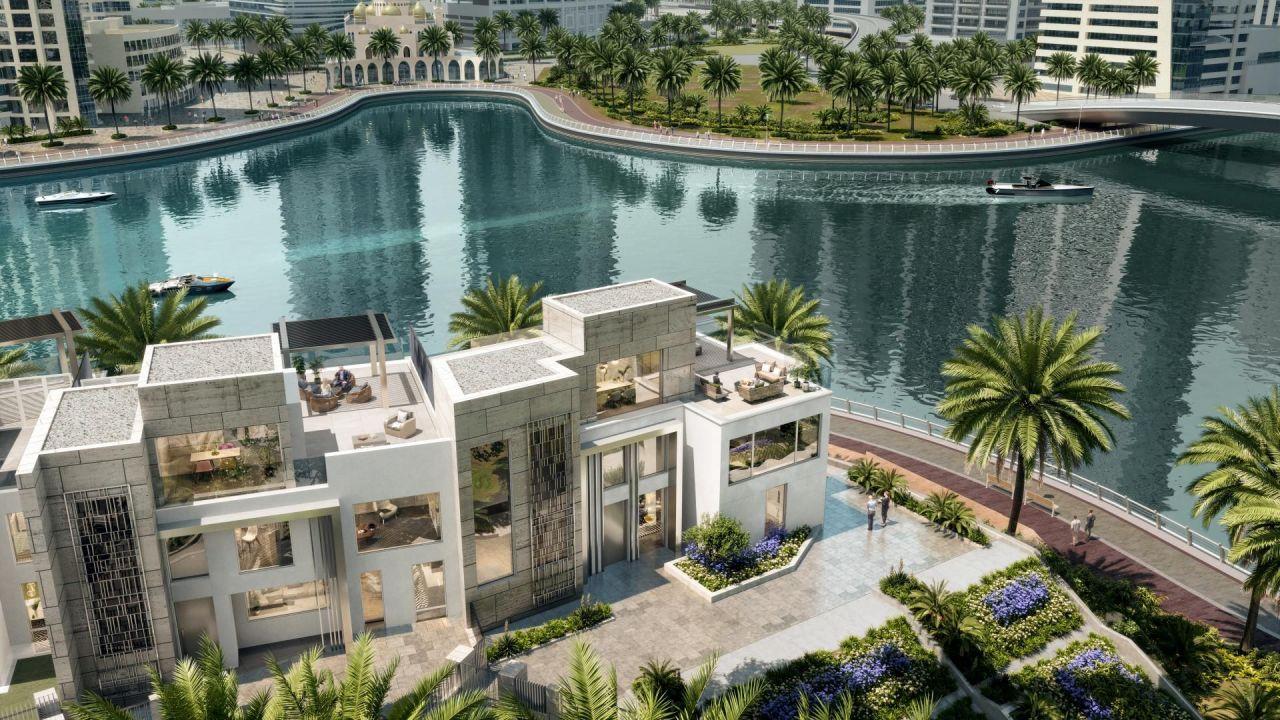
The highest activity was shown in the areas of Al Ruwayyah 1, Meydan 2, Al Yalayis 1, and Business Bay. These locations are being actively developed and offer both premium residential complexes and commercial real estate. Limited land supply in key areas, the influx of international developers, and the implementation of large-scale infrastructure projects continue to support price growth.
An additional factor remains the flexible UAE visa policy, including “golden visas” for investors. This strengthens capital inflows from Europe, Asia, and CIS countries. Many transactions are denominated in dirhams, however investors often focus on calculations in euros to assess returns and potential profits.
The UAE strengthens positions in fintech and digital technologies
Alongside real estate market growth, the United Arab Emirates is making a serious bet on financial technologies. The Central Bank of the United Arab Emirates launched the first national biometric payment system in the Middle East. The new platform allows purchases to be confirmed using facial recognition or palm scans without the use of bank cards or smartphones.
The pilot project is already operating in Abu Dhabi and Dubai, and in the coming months the system will be scaled across the entire country. This solution increases transaction security and accelerates the payment process, which is especially important for a dynamic metropolis with high tourist and business traffic.
Biometrics in airports and the Dubai 10X strategy
Innovations are closely linked with the “smart travel” program, which has already been implemented in the country’s largest airports — Dubai International Airport and Zayed International Airport. In the future, unified biometric registration will allow passengers to pass passport control, pay for purchases, and use airport services without presenting documents or gadgets.
At the same time, Dubai is developing the ambitious Dubai 10X strategy, aimed at ensuring that the city stays at least ten years ahead of global megacities. Within its framework, projects are being implemented such as the “20-minute city,” the creation of an urban terminal for remote passenger check-in, and an early disease detection system using artificial intelligence.
Dubai strengthens its status as a global investment hub
The combination of record-breaking real estate market indicators, technological innovations, and large-scale infrastructure initiatives makes Dubai one of the most attractive cities for living and investment. The growth of transaction volumes by tens of billions of dirhams, equivalent to many billions of euros, confirms sustained interest from international capital.
If the current dynamics continue, 2026 may become a new historical maximum for the emirate. For investors, this is a signal that Dubai continues to strengthen its position as a global financial and technological hub, offering opportunities both for preserving capital in euros and for long-term asset growth.